Hala Mohamed is a Senior FF&E Designer at U+A with experience across hospitality, residential, commercial, and educational developments in the UAE, GCC, and Egypt. With a background that bridges interior design and technical delivery, she specializes in translating design concepts into carefully curated material palettes, furniture selections, and detailed FF&E packages. Her experience spans luxury hospitality resorts & large-scale developments, where she combines research, coordination, and a deep understanding of materials to create interiors that are both functional and meaningful. From early concepts to final documentation, Hala approaches each project through careful observation, asking how spaces will be experienced, remembered, and connected to the people who inhabit them.
When developing an FF&E concept, what is the process you follow to move from an initial idea to a final selection?
Projects begin with understanding the story behind the space. I start by looking at the design vision, brand identity, location, and operational requirements. From there, I develop a material palette and carefully curate finishes, furniture, lighting, fabrics, and accessories that bring the concept to life. Selections are guided by quality, durability, sustainability, maintenance, budget, and long-term performance. Close collaboration with suppliers, manufacturers, and consultants ensures the design is technically sound while staying true to the project vision. The goal is to deliver a cohesive FF&E package where materials and furnishings work together to create a functional, timeless experience.
When you personally walk into a space, what is the first thing that makes you feel connected to it? Is it a material, a sense of atmosphere, a detail, or something else that creates a lasting impression for you?
The first thing noticed is the overall atmosphere of the space and how successfully the design story has been translated through the details. The connection comes from seeing how materials, furniture, lighting, and finishes work together to create a sense of identity and experience. A well-designed space does not rely on one element alone; it is the balance between the overall concept and the finer details that makes it memorable. The strongest interiors are those where the brand identity feels naturally integrated, while still creating a comfortable and meaningful experience for the people using the space.
You have worked across hospitality, residential, commercial, and educational projects. How has working across different typologies influenced the way you approach people’s needs and experiences within a space?
Working across different project types has shown that every space has its own purpose, users, and requirements. However, the main goal remains the same: creating spaces that are functional, comfortable, and meaningful. Residential projects focus on creating welcoming environments that support different lifestyles. Commercial spaces require flexibility, efficiency, and a strong connection to the brand, while educational projects focus on durability, wellbeing, and user experience. Hospitality projects aim to create memorable experiences through thoughtful materials, furniture, and details. This experience has helped develop a flexible FF&E approach, where selections are considered not only for their appearance but also for their function and how they support the people using the space.
When developing an FF&E concept, what is the process you follow to move from an initial idea to a final selection?
Developing an FF&E concept always begins with understanding the project's design intent, brand identity, and operational requirements. From there, the concept is translated into a carefully curated selection of materials, finishes, furniture, and accessories that support both the design vision and the way the space will be used. Each selection is evaluated based on quality, durability, sustainability, maintenance, budget, and technical compatibility. Close collaboration with other disciplines, suppliers, and manufacturers is an essential part of the process to ensure every element works together seamlessly. The aim is to create a cohesive design where every material and furniture piece contributes to the overall story of the space while remaining practical to procure, install, and maintain over the long term.
Having worked across the UAE, GCC, and Egypt, how do different cultures and environments influence the way you think about materials, colours, and interior experiences?
Working across the UAE, GCC, and Egypt has shown how culture and environment influence FF&E selections. Material choices, colours, finishes, and furniture should reflect the local identity while meeting the needs of the project. Climate is also an important factor when selecting materials to ensure they are durable and suitable for long-term use. The goal is to create spaces that feel connected to their location while balancing aesthetics, functionality, and user experience.
Every project has its own personality. How do you discover the balance between creating something visually refined and ensuring the space feels authentic and comfortable for the people who will experience it?
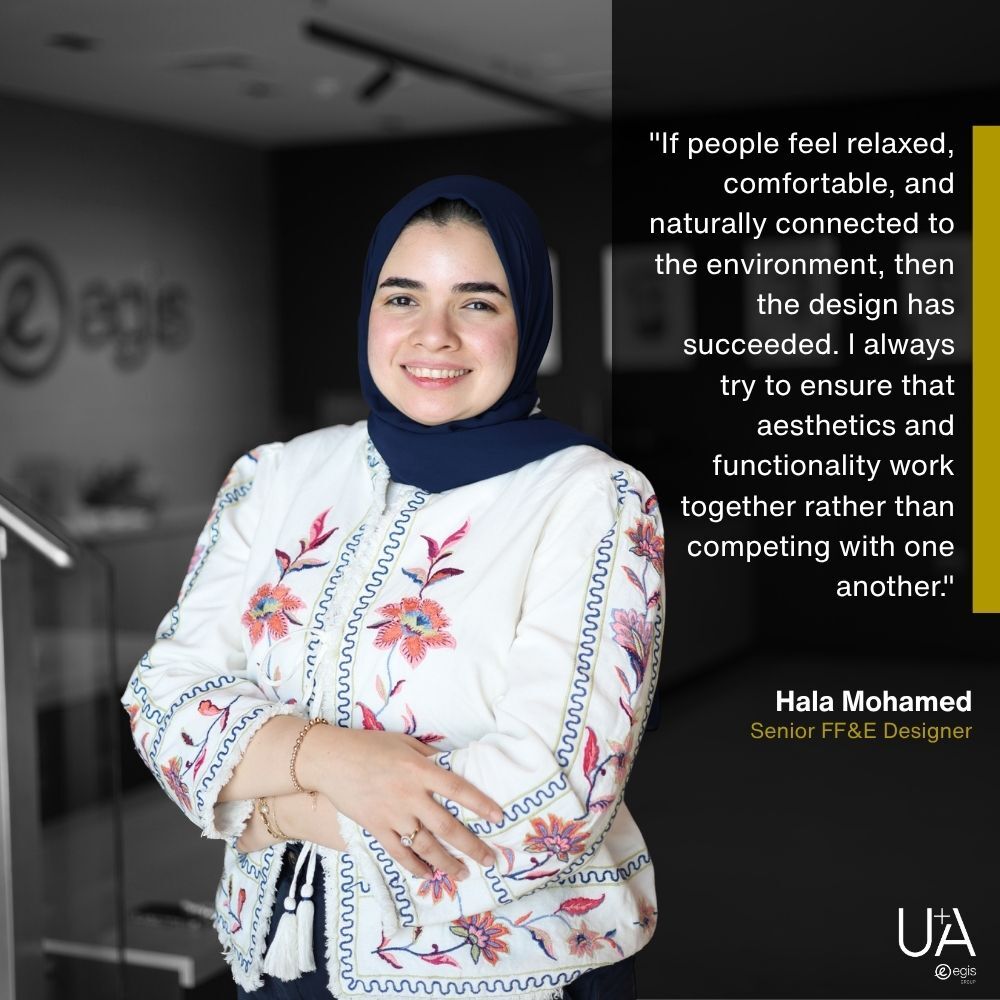
A refined design is achieved through proportion, thoughtful material selection, and attention to detail, but authenticity comes from creating spaces that support real life. If people feel relaxed, comfortable, and naturally connected to the environment, then the design has succeeded. I always try to ensure that aesthetics and functionality work together rather than competing with one another.